
Welcome to Giannutri: 2,000 years of history in a journey through time
· 5 minutes read
This is not a sales pitch. Its only purpose is to help you find meaning in your time in these waters, and to share with you the emotions of a magical island.
Giannutri is one of the 73 inhabited islands of Italy. It has about twenty residents on 2.6 km²: a population density almost like Greenland’s, yet just two hours from Florence and Rome.
From this moment on, this island is yours too. Sit down on the little beach of Cala Spalmatoio, look out to sea and take a journey through time.
2,000 years ago: the ship of the Domitii Ahenobarbi
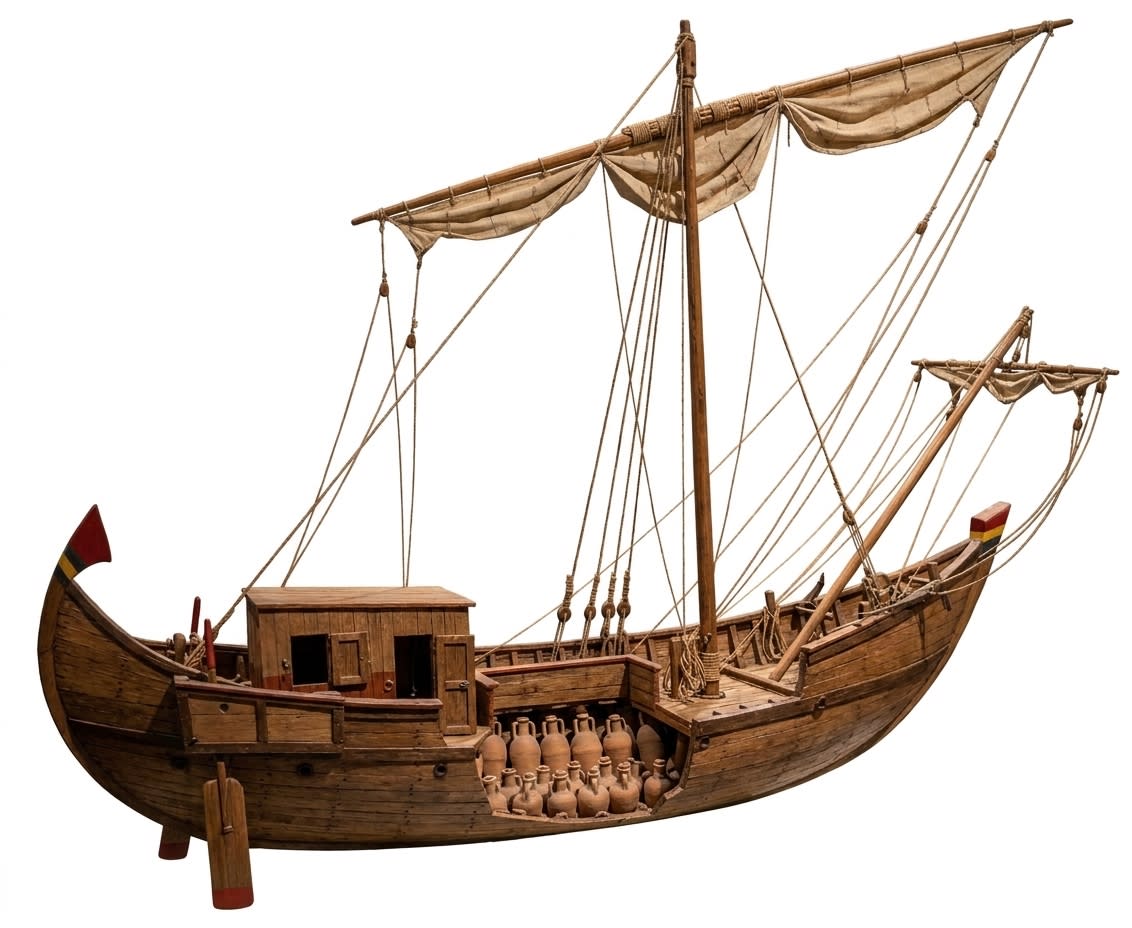
Imagine being here 2,000 years ago: the same atmosphere, the same light breeze, the same sun. A small Roman ship lies at anchor in the bay, her bow pointing west.
She is 15 metres long, with oars along her sides and a rectangular sail of rough canvas. Her hold is full of amphorae and sacks of grain. She belongs to the Domitii Ahenobarbi, a family with a villa on the other side of the island and more residences nearby, in an area called Argentario because the Ahenobarbi trade in iron and silver.
See? A small boat is coming alongside to unload some slaves and wooden crates. A man at the bow shouts:
Festina, festina! Aquilo venit. Iactita funem!
Quick, quick! The Tramontana is coming, a wind as strong and fierce as an eagle. Throw me the line!
1543: Barbarossa’s Turkish fleet
For another thousand years the island is visited only by fishermen and by the galleys of the Maritime Republic of Pisa. Then, in 1543, the Turkish fleet sacks Orbetello.
Picture the ships of Hayreddin Barbarossa sheltering in Cala Spalmatoio to be careened, with crowds of men scraping the hulls while strong ropes hold them in place.
1686: the Grand Duke’s galleys
From 1573 to 1707 these waters are ruled by the Spanish. But in 1686 the Grand Duke of Tuscany sends an admiral to fight the pirates.
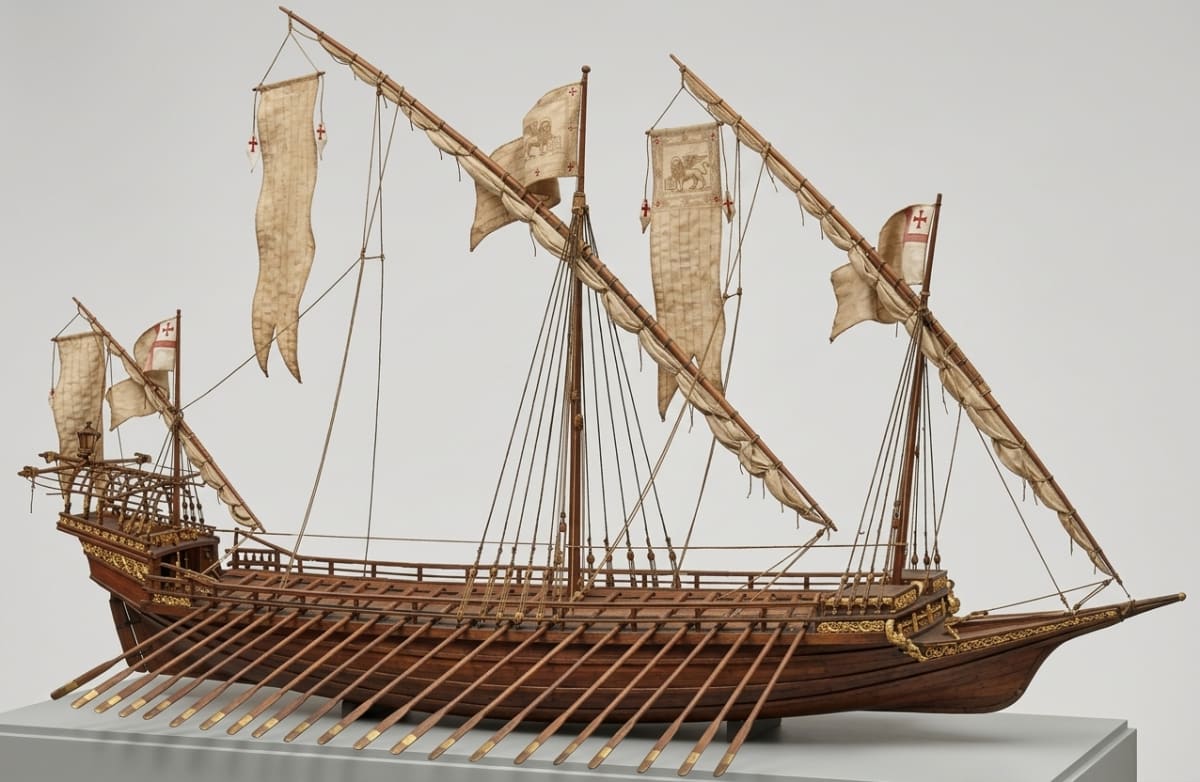
Two galleys glide into Spalmatoio like fish: in Greek, galeos means shark. Can you see them? They are 40 metres long and 5 wide, with two masts and two triangular sails.
Look at the crew of sailors and convicts. The one in the red hat is the captain, the short stout one is the steward, the one in the dark tunic is the barber-surgeon. Below sit the rowers, slaves chained to 25 benches, driven by the overseers and by the musicians who beat out the stroke. At the stern, the helmsman at the tiller and the pilot in charge of the course.
The Spanish galleon at Cala Volo di Notte
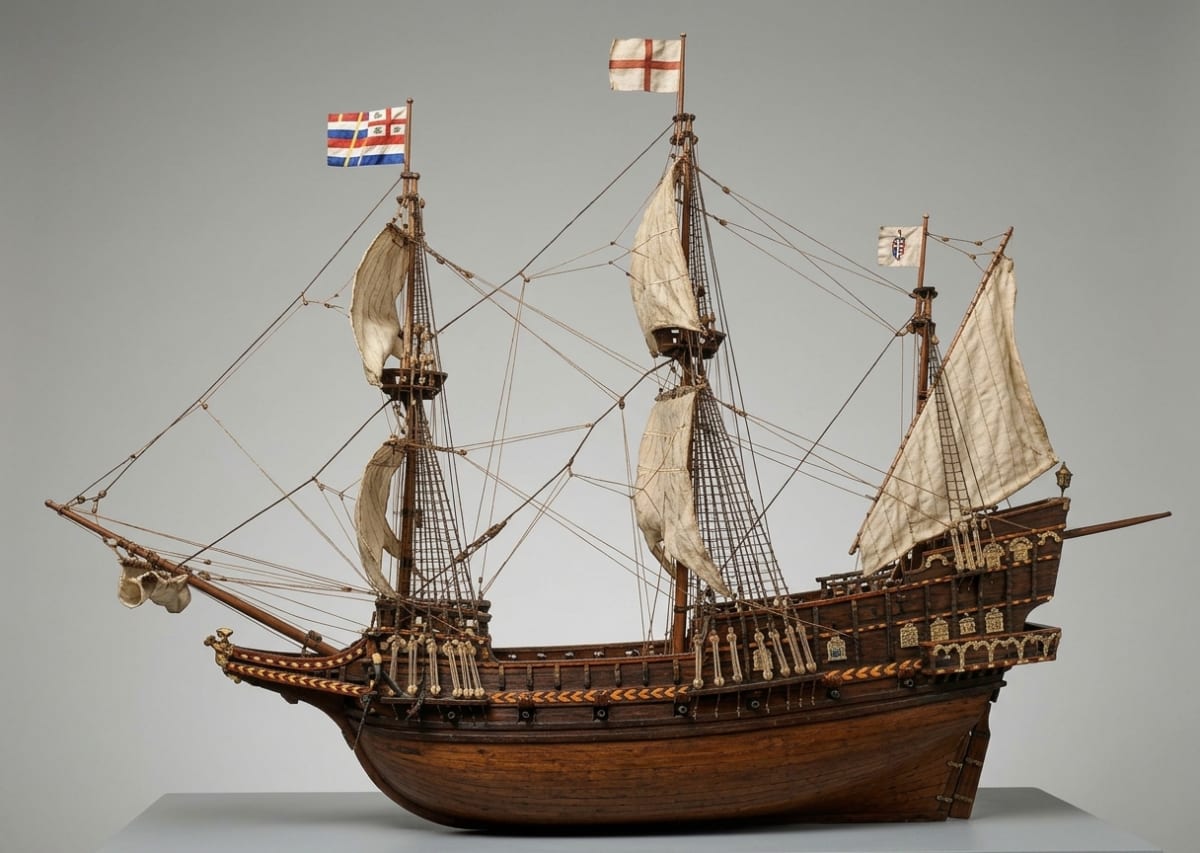
With the Spanish come the galleons too. One lies at anchor in Cala Volo di Notte: 40 metres long and 10 wide, with two castles, one at the bow and one at the stern, and four masts carrying square and lateen sails.
At the bow there is a great bowsprit, below deck the gun deck, and at the stern the outrigger, a spar used to lead the sheets.
1803: engineer Grazzini and the Roman villa
Now imagine a summer morning in 1803. Maria Luisa of Bourbon, regent of the Kingdom of Etruria created by Napoleon, sends engineer Giovanni Grazzini to build military outposts on the island.
There he is, can you see him? He is stepping onto the little beach of Spalmatoio with twenty men, explaining that he wants to map the island and uncover its ancient ruins. He will discover the Roman villa.
Soon after, the British arrive, shell the island and take it. Then the Kingdom of Italy is born, but on Giannutri everything stays just as it is today, with the same seagulls rising into the sky and gliding back down to the sea.
1888: Marietta and Gualtiero
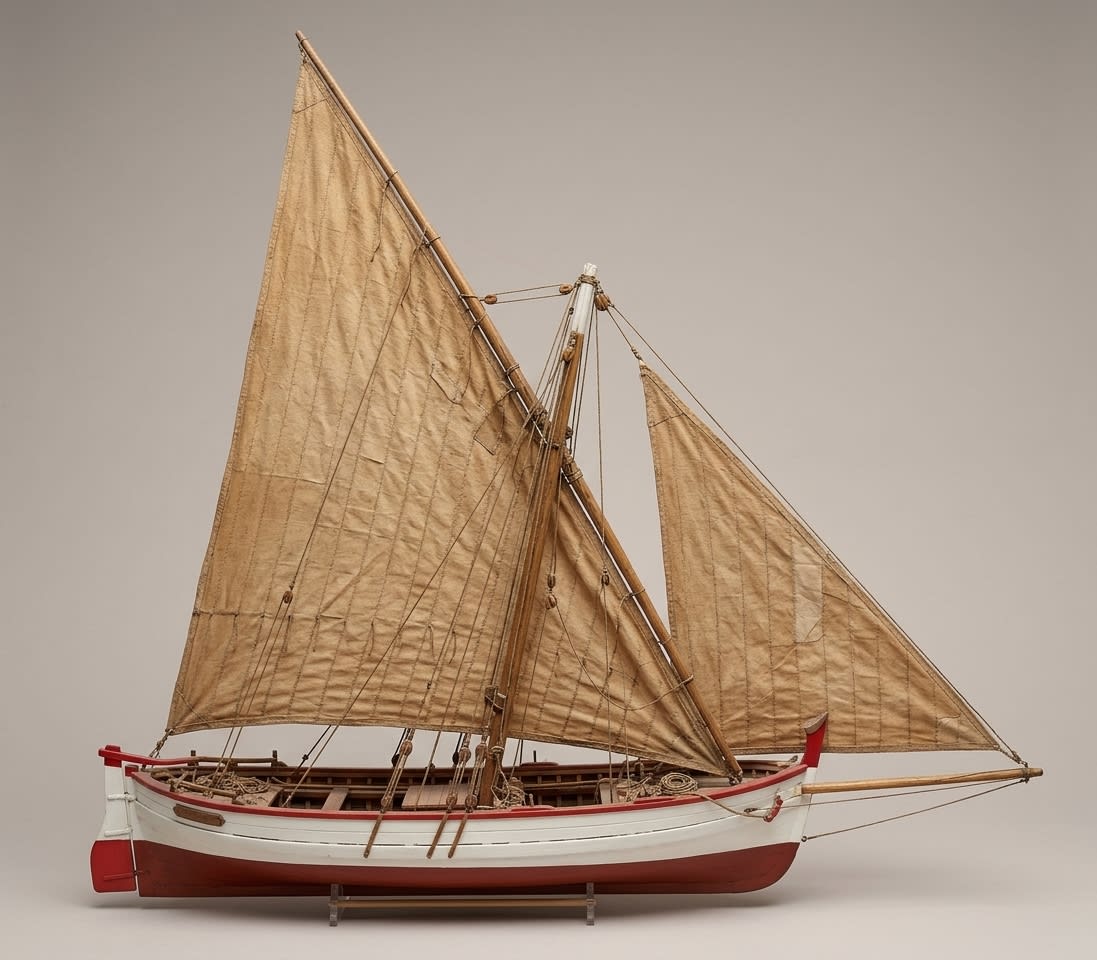
Now imagine it is 1888. A 10-metre wooden bilancella is sailing across the bay, with an 8-metre mast, a long yard holding a white canvas sail, and a boom.
On board is a young woman, Marietta Moschini. She comes from Florence and will live on the island until her death in 1927.
On the flat rock by the little beach stands a bearded man: Gualtiero Adami, who fought with Garibaldi. He holds a wooden gangway for the passengers landing from Porto Santo Stefano after a three-hour crossing.
Marietta and Gualtiero lived together for many years in a hollow of the Roman villa, sheltered from the wind.
1942: the soldiers of Punta San Francesco
Now it is 1942. Suddenly you hear machine-gun fire from the Mediterranean scrub near Punta San Francesco, on the left as you look towards the mouth of the bay.
Who fired? Four young soldiers live hidden there with a machine gun and a little donkey, next to a small concrete hut. Inside are the munitions meant to bring down the American planes flying over the peninsula.
In 1945 the war ends and the soldiers go home. In the 1960s people begin building houses on Giannutri, lived in for just a few weeks a year, in July and August.
Giannutri today
You did not come to this island by chance: everyone finds only what they are looking for.
If you are looking for something special, you can find it on Giannutri, thanks to the absence of traffic and shopping centres, in a universe of colours, scents and, above all, silences.
Spending some time on this island means stepping away from the world, surrounded by dreams, emotions and unique sensations, in a place that changes the way you are and the way you think. A place that waits for you out of season too, when it is perhaps even more beautiful.
This is your island, because here you will always find something that resembles you.
To explore the coves, the trails and the Roman villa in person, see our guide to the island of Giannutri. And if you want to know how to reach it, here is how to get to Giannutri.
Want to experience Giannutri?
Our sea view apartments are in Cala Spalmatoio, a short walk from the harbour.
Discover the apartments